Welcome to my blog about health, nursing, caring, kindness and positive change. Our world is full of such negative influences and bad choices, today is the day to make a positive change both physically and mentally in your life.
ERNursesCare is a blog incorporating my nearly 30 years of experience in the healthcare field with my passion for helping others, I want it to encourage others with injury prevention, healthy living, hard hitting choices, hot topics and various ramblings from my unique sense of humor. Come along and enjoy your journey......
With the November elections looming over us right now most of us are focused on the issues that are presented by each candidate. Meanwhile as I am working weekly in the Emergency Department, we are treating a constant influx of patients who are addicted to prescription and illicit drugs. I read that more than one half of all Americans 12 and older drink some form of alcohol............say what. The abuse of recreational drugs (who the heck named them recreational!!) and prescription medications has climbed to a mind staggering 30 million people. We can't blame those numbers on Hilary Clinton or Donald Trump, although listening to all these ads on TV one after the other has me thinking daily about drinking myself.
I do hope that whomever wins this election can make some strides in healthcare for all, addiction treatment for anyone that needs it and getting control of pharmaceutical companies that are focused on making billions of dollars instead of truly helping people.
Please get out and vote on November 8th, let your voice be heard.
The infographic below provides some great information about drug types, addiction, legal and illegal drugs, teenage drug addiction and the rising Emergency Department visits due to drug addiction. Something has got to change! We are living in The United States of drug addition!
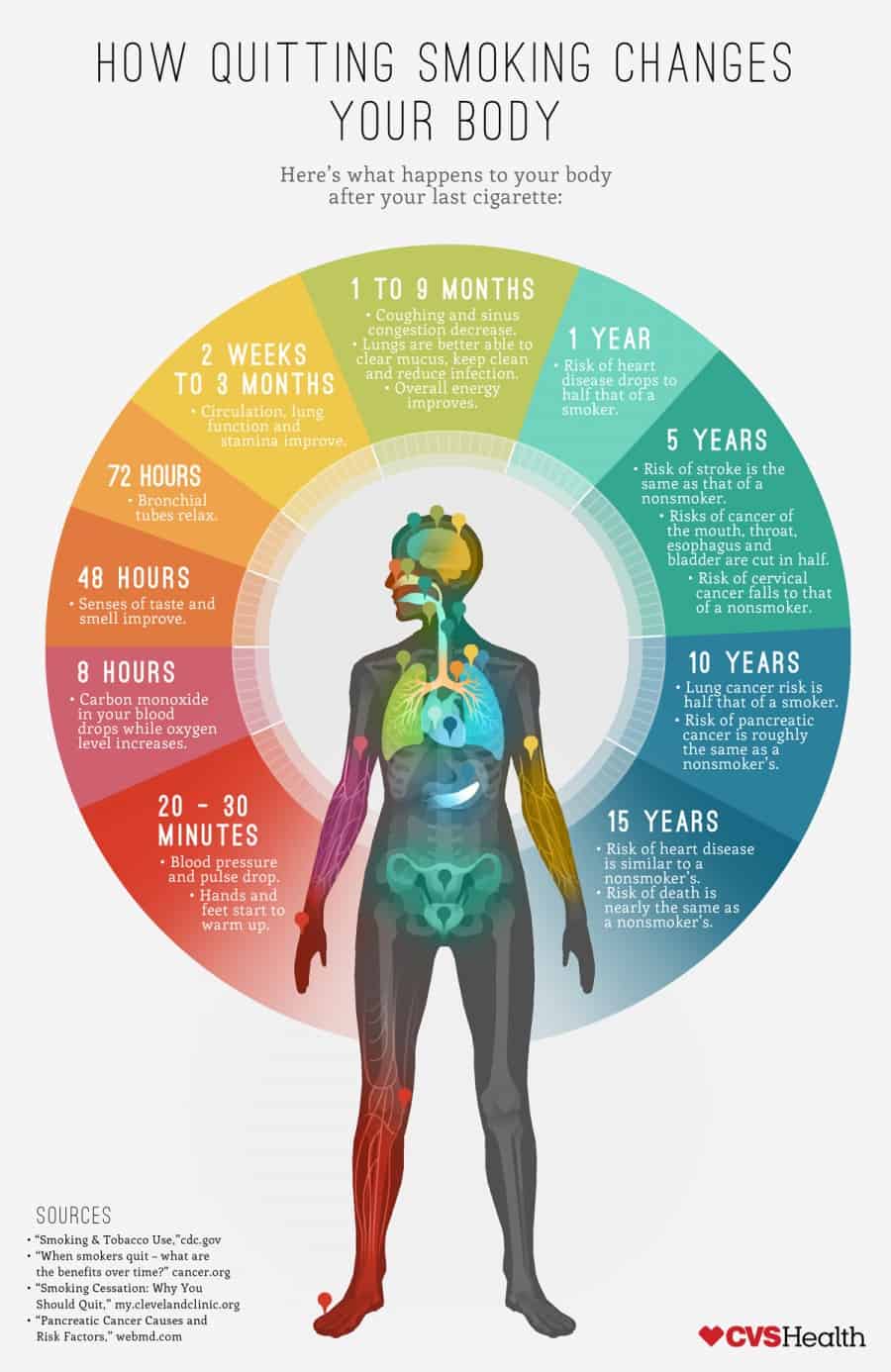
Smoking is an epidemic all over the world, if you smoke, have you ever thought about or tried to quit? Here is what actually happens to your body after you put down that last cigarette?
The goal is to make the healthy choice and stop for 5- 10 years , this cuts your risks in half of stroke and cancer. If you notice in the info-graphic below, even 1 month-9 months after quitting, your lungs are better and your overall energy begins to improve.
Smoking is just not smart, we all know the risks, just do it! Quit today! I lost my mother to lung cancer, she smoked for over 50 years, she was also one of thousands of smokers that die everyday from smoking...do you want to be one of the thousands?
Nurses Week each year is a family affair, as nurses we feel a bond to each other. Working side-by-side as individuals or as a team, nurses share some of the most demanding, precious and life-changing moments together. We share new life, triumphant miracles, horrific trauma and of course death of the patients we live each day to take care of. Nurses around the world share a consistent knowledge and passion that only a nurse feels .....knows......lives.....
How many of you have bonded with a special nurse that you may have worked with and shared that common bond with?
Above: my bestie, we met in a class right before I started working in the ED.
My very best friend of nearly 28 years is just that nurse. We worked together in the emergency department for many years ....laughed and cried together as we grew into "seasoned " nurses. She has had my back, as I have had hers thru many life events, joys and sorrows. Even though we don't work
together anymore, we stay very close and I consider her my sister ( we even look alike...lol).
This year during National Nurses Week, the travel nurse company Fastaff celebrates just such relationships with a giveaway : two $500 gift cards for Southwest Airlines! How awesome is that?
To enter complete the form Here to nominate someone who is a part of your life... your nurse family.
Happy Nurses Week to nurses all over the world! Enter the giveaway today! You only have a day left to enter.....so hurry do it now!
Last week we lost another iconic musician, Prince. The end of an era that I remember so well as I am an 80's girl. Only 57 when he was found dead on Thursday April 21st, so young........so sad.
My top 5 favorite Prince songs:
Lets Go Crazy
Purple Rain
Little Red Corvette
U Got The Look
1999
What are some of your favorite Prince hits? leave a comment and let me know.
Just what do you know about the "Zika Virus", that mosquito- borne illness that is in the news all the time now it seems? Did you know that it has actually been around since 1947? Yep that's right, it started in Africa and spread to Asia and the Pacific islands, then to Latin American and the Caribbean where it is rapidly spreading now.
So what are the symptoms of Zika?
Most people don't know they have been affected with the virus at all, they will have no symptoms
The most common symptoms can be fever, rash, joint pains, conjunctivitis (redness of the eyes) , muscle pain and/ or headaches possibly.
The incubation period (the time from exposure to symptoms) for Zika virus disease is not known, but is likely to be a few days to a week.
It is best to see your doctor or healthcare provider if you are pregnant and develop any of the symptoms above within 2 weeks of traveling to any of the affected countries/areas.
Zika virus is usually a mild illness with symptoms lasting only a short time after being bit by an infected mosquito.
People infected with the Zika virus do not usually need any kind of hospitalization and very rarely are ill enough to die from the virus. Please to not present to the Emergency room in a panic because you think you have symptoms of the Zika virus.
There is no cure and no vaccine available yet, although they are working towards the vaccine.
Prevention: "Education is the key to prevention"
There is no cure and no vaccine for Zika, so prevention is the best cure we have right now.
Avoiding mosquito bites especially in areas that are know for outbreaks of the Zika virus.
Prevent sexual transmission of the virus by using condoms or abstaining from sexual contact.
Wear long sleeve protective clothing and pants to keep bare skin covered, be aware that mosquitoes that carry the Zika virus usually bite more in the day-time hours.
Stay indoors in air conditioned rooms or keep screened doors closed to limit exposure
Sleep under a mosquito net if you are in a heavily infested Zika area
Use Environmental Protection Agency (EPA)-registered insect repellents with one of the following active ingredients: DEET, picaridin, IR3535, oil of lemon eucalyptus, or para-menthane-diol. Choosing an EPA-registered repellent ensures the EPA has evaluated the product for effectiveness. When used as directed, EPA-registered insect repellents are proven safe and effective, even for pregnant and breast-feeding women.
Always follow the product label instructions. Reapply insect repellent as directed. Do not spray repellent on the skin under clothing.
If you are also using sunscreen, apply sunscreen before applying insect repellent.
Protect children from mosquito bites (they need special care with chemical bug repellents)
Do not use insect repellent on babies younger than 2 months old.
Do not use products containing oil of lemon eucalyptus or para-menthane-diol on children younger than 3 years old.
Dress your child in clothing that covers arms and legs.
Cover crib, stroller, and baby carrier with mosquito netting.
Do not apply insect repellent onto a child’s hands, eyes, mouth, and cut or irritated skin.
Adults: Spray insect repellent onto your hands and then apply to a child’s face.
Be sure to check your yard often, daily even for standing water and keep it dumped out. Mosquito's can breed in a tiny little bit of water, like the size of a bottle cap (sneaky little boogers), so be a detective and get rid of them.
Protect your family and your community, it's just the right thing to do!
Be smart about planning a pregnancy if you are going to travel to South America or the Caribbean , talk to your doctor first. It might be a better option to wait or delay your travel plans.
Below is a great infographic I found that explains the Zika virus in detail (with a timeline) , symptoms, treatments and preventative measures.
Do you want more information about the Zika Virus? Here are a few links to visit and learn more.
Please educate yourself and be smart this summer about mosquitos, they can carry numerous virus's and diseases. With some prevention and a dose of smartness we can be smarter.
First of all, why are you out driving in the winter ice and snow to begin with?
It's understandable if you are a healthcare worker, emergency services personnel, police, rescue, fire fighter or even a lineman with the power company, we have to travel in treacherous conditions to take care of the sick, injured and other such problems. If you do not fall into one of those categories, you need to keep your tail at home. Nothing is so important that you need to risk your life or the life of your family to travel on snow/ice covered roads that you may not be used to traveling on. I live in the south, North Carolina to be exact, and nobody here can drive worth a darn when it snows (except the Northern transplants lol), southerners freak out and buy all of the bread and milk they can. They will still drive to the ER for a toothache and a work note.....come on. Please be safe and smart, Stop first and think about your decision to drive anywhere first. Only if you absolutely have to get in a car and drive, please follow these helpful tips to make your journey safer.
Driving in the snow
If you find yourself driving in the snow, stay alert, slow down and stay in control. These are the three key elements to safe driving in the snow.
Here are a few other tips for driving in the snow:
If you think you may be heading into snow or there is a possibility of driving in the snow, make sure you do a maintenance check on your vehicle before making the trip. Check the vehicle battery, belts and hoses, anti-freeze, oil, lights, brakes, heater and defroster and check the exhaust system for leaks which may allow carbon monoxide to enter the vehicle.
Plan your route ahead of time and give yourself extra travel time. Make sure someone knows your travel plans.
Wear comfortable clothing that does not restrict your movement while at the wheel. Keep warm clothing available for when you exit the vehicle.
Always clear any snow and ice from all windows, lights, mirrors and the roof before driving. After starting the vehicle wait for the interior windows to clear of fog so you will have appropriate visibility.
Make sure there is sufficient windshield washer fluid in the vehicle reservoir and that it is rated for freezing temperatures.
It takes longer to stop on slippery surfaces, so add additional time to the three-second rule.
Know the proper handling procedures for a skidding vehicle.
Slow down in snow and icy conditions, make turns slowly, and make all starts slow and smooth.
Remember that bridges and overpasses may freeze before the regular travel lanes of a roadway. Watch out for black ice, areas of the roadway that appear black and shiny and where your vehicle can suddenly lose traction. Slow down in these areas and keep your foot off the brakes.
If you get stuck or stranded, don’t panic. Stay with your vehicle for safety and warmth. Wait for help to arrive. If you have a cell phone and are in an area with cell phone service, try calling for help. Try to always know your exact locations while driving.
Keep your clothing dry. Wet clothing can lead to dangerous loss of body heat.
Winter Driving Survival Kit
It’s a good idea to keep a winter survival kit in your vehicle if you might be traveling into an area where you could encounter snow. Having essential supplies can provide some comfort and safety for you and your passengers. The following items are recommended for your winter driving survival kit:
Ice scraper/snowbrush
Shovel
Sand or other type of traction aid
Tow rope or chain
Booster cables
Road flares or warning lights
Gas line antifreeze
Flashlight and batteries
First aid kit
Fire extinguisher
Small tool kit
Extra clothing and foot wear
Non-perishable energy foods, like chocolate or granola bars, juice, instant coffee, tea, soup, and bottled water
Candles and a small tin can to hold the candle
Water proof matches
Winter driving can be safe with planning and extra caution.
According to the recently released World Health Organization (WHO) report:Preventing Suicide: A Global Imperative, over 800,000 people die by suicide across the world each year. The report notes that this estimate is conservative, with the real figure likely to be higher because of the stigma associated with suicide, lack of reliable death recording procedures, and religious or legal sanctions against suicide in some countries.
We may not be able to pinpoint the exact figure, but we do know that each individual suicide is a tragic loss of life. It is hard to imagine the extreme psychological pain that leads someone to decide that suicide is the only course of action. Reaching out to someone who is struggling can make a difference.
‘Preventing Suicide: Reaching Out and Saving Lives’ is the theme of the 2015 World Suicide Prevention Day (WSPD), an initiative of the International Association for Suicide Prevention(IASP) and the WHO, a co-sponsor of meetings and events related to WSPD 2015.. Since 2003, WSPD has taken place on 10th September each year. It serves as a call to action to individuals and organizations to prevent suicide. This year, the theme encourages us all to consider the role that offering support may play in combating suicide.
The act of showing care and concern to someone who may be vulnerable to suicide can be a game-changer. Asking them whether they are OK, listening to what they have to say in a non-judgmental way, and letting them know you care, can all have a significant impact. Isolation increases the risk of suicide, and, conversely, having strong social connections is protective against it, so being there for someone who has become disconnected can be life-saving.
Reaching out to those who have been bereaved by suicide
Suicide is devastating for families, friends and community members who are left behind. They may experience a whole range of emotions, including grief, anger, guilt, disbelief and self-blame.They may not feel that they can share these overwhelming feelings with anyone else. Therefore, reaching out to those who have lost someone to suicide is very important.
As a result of the stigma surrounding suicide, those who are bereaved by suicide are often perceived differently from those who lose a family member through another cause of death. People who are bereaved may find that they are avoided by people who don’t know how to broach the subject or offer their condolences. Or they may just feel that others do not understand the intensity of their emotional response to the death of their loved one.
Once again, a pro-active approach and offering a sympathetic, non-judgmental ear can make all the difference. Giving someone who has been bereaved by suicide the opportunity to talk about their loss, in their own time, on their own terms, can be a precious gift. Allowing them to express their full range of feelings can be cathartic, and can help them to take the first small step in moving through their grief. Starting the conversation may be difficult, but it will almost certainly be appreciated.
Reaching out to put people in touch with relevant services
Although the support of friends and relatives is crucial for people who may be at risk of suicide and for people who have lost someone to suicide, it is not always enough. Often more formal help is also needed. Such help can take many forms, and is likely to vary from country to country. In high-income countries, it may include specialist mental health services and primary care providers, both of which offer clinical care. It may also include a range of community organisations which provide non-clinical support, as well as support groups and self-help groups. In low- and middle-income countries, the more clinically-focused services are less readily available, and there is a heavier reliance on community organizations. Part of reaching out to vulnerable individuals can involve helping to link them to relevant services.
Reaching out to the suicide prevention community
There is strength in numbers. Around the globe, many individuals and organizations are involved in efforts to prevent suicide. We can learn from each other, and strengthen the evidence base for effective interventions. Reaching out to those who are travelling the same road increases the likelihood that our collective efforts to reduce the numbers of people who die by suicide, and the numbers of people for whom these deaths have shattering effects, will be successful.
Reaching out on World Suicide Prevention Day
On September 10th, join with others around the world who are working towards the common goal of preventing suicide. Check in on someone you may be concerned about, listen to what they say, how they say it and show them kindness and support. Investigate ways of linking in with others who are trying to prevent suicide in your community, your country, or internationally. Show your support by organizing or taking part in a WSPD activity in your area and/or join in with IASP’s Cycle Around the Globe.
Please, reach out and save lives.
Credit: IASP- World Suicide Prevention https://www.iasp.info/wspd/
Light a Candle Near a Window at 8pm on September 10th




![What is Zika Virus? [Infographic] Infographic](https://thumbnails-visually.netdna-ssl.com/WhatisZikaVirusInfographic_56ac687e62283_w1500.jpg)


